Our research
Inter-cellular causality of microvascular instability
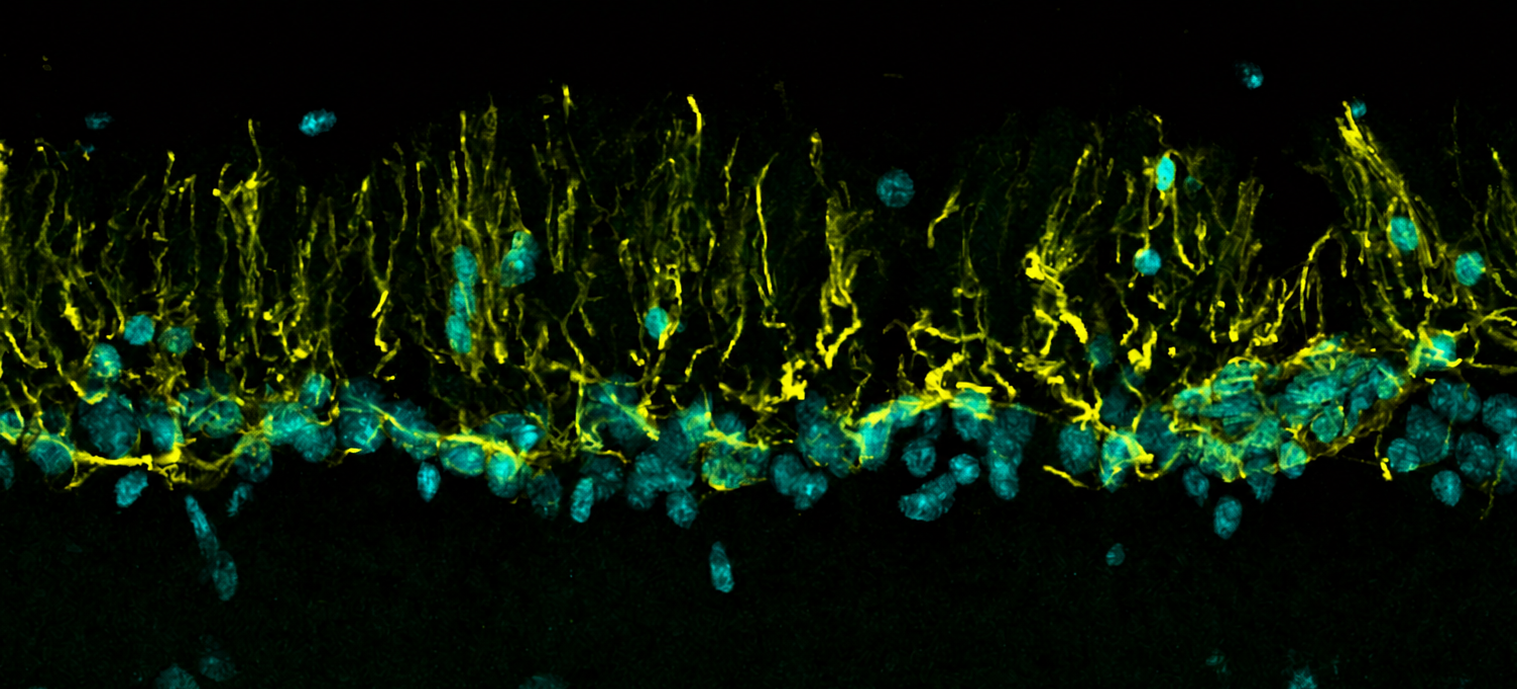
When referring to blood vessels, small does not mean simple. Microvessels are pioneers populating tissues, and the ultimate responsible for the complexity of organs in evolved organisms. Despite all vessels are composed by a single layer of cells (endothelial cells) facing the most inner part of the vessel (lumen), they beseech the support of neighbouring cells such as pericytes or glia for the blood vessel to be formed and to function. These tiny ecosystems of intertwined cells and functions is known as vascular units. Our research explore how these distinct cells communicate to determine the formation and dysfunction of these microvessels in physiology and in disease.
Funding:


Age-related macular degeneration
Homocysteine is an amino acid that, in excess, becomes toxic and requires folates and other vitamins to be metabolized. Various studies showed that patients with age-related macular degeneration display low levels of folate accompanied by high levels of homocysteine. While macular degeneration characterizes by inflammation and pathological angiogenesis, it is not clear whether these pathological signs depend on the efficiency of transporting folate to the cells. Our research explores if specific cells in the retina become inefficient at transporting folate with age, ultimately leading to the accumulation of homocysteine in the retina and contributing to macular complications.
Funding:


Diabetic retinopathy
Diabetic retinopathy is a leading cause of blindness in diabetic patients and originates in lesions in the small vessels of the retina. Although hyperglycemia is a well known factor driving this pathology, a plethora of other risk factors are also at play. Our lab investigates how different physiological and metabolic alterations such as hyperhomocysteinemia or arterial rigidity (collaboration with Prof. Helene Girouard, UdeM) can render the microvessels of the retina more vulnerable to disease. These notions will help us to refine current treatments and develop new therapeutic strategies.
Funding:


Poppers maculopathy
Although poppers maculopathy has been increasingly recognized in clinical practice, it remains a poorly understood toxic maculopathy with limited mechanistic insight. Reported cases range from transient visual disturbances to irreversible macular neurodegeneration, yet the biological basis of this vulnerability, especially in individuals co-using ritonavir or PDE5 inhibitors such as sildenafil (commonly known as “Viagra”), is almost entirely unknown. This collaborative project with Prof. Pedro de la Villa and Prof. Cecilia Fernandez (Universidad Alcalá, Spain) project tackles an urgent and understudied problem in vision science: the neurovascular and retinal consequences of exposure to isopropyl nitrite (commonly known as “poppers”), particularly within “chemsex” contexts where drug combination.
Funding:

Biometrics and function of the trans-gender eye
Biological sex is a systemic variable largely influenced by the levels of sex hormones. The receptors for sex hormones are ubiquitously expressed in all tissues, including the eye. However, optometric guidelines have traditionally relied, almost exclusively, on cis-gender data and overlooked the unique physiological profiles of trans individuals undergoing gender-affirming hormonal therapy (GAHT). This is a collaborative project with Prof. Marie-Lou Garon (UdeM) where we examine ocular biometrics in trans-persons and whether these shift away from cis-gender baselines.
Funding:

Novel drug delivery systems based on gold nanoparticles
Neovascular retinal pathologies (age-related macular degeneration, diabetic retinopathy) are some of the most pervasive blinding pathologies. Current treatments rely on intravitreal injections of anti-VEGF, and while they are effective at controlling destructive angiogenesis, they require repeated injections over time and can lead to secondary effects. This is a collaborative study with Prof. Elodie Boisselier (ULaval, Canada) that aims at developing alternative methods to control the angiogenesis using topical applications. We propose the use of gold nanoparticles (AuNPs) for their potential intrinsic anti-angiogenic properties, and as a more efficient drug delivery vector.
Funding:

With the support of:


